









Alpha Male Plastic Surgery helps men across Los Angeles and Southern California who are unhappy with the outcome of a previous cosmetic procedure. Common examples include a chest that still looks puffy after gynecomastia surgery, or one that now sinks inward beneath the nipple, six pack etching that sits off from the real muscle, a pec implant that has shifted, and a jaw or nose that lost its masculine shape. Revision surgery corrects those results. Dr. Douglas Steinbrech, author of the textbook Male Aesthetic Plastic Surgery, has completed more than 3,000 revisions on men, and many of his Beverly Hills patients originally had their surgery with another practice.
What Makes Revision Surgery Different
A first procedure is performed on tissue that has never been treated. The layers between skin, fat, and muscle separate cleanly along natural planes. After surgery, the body fills those planes with scar, so a revision surgeon has to carefully free scar tissue from nerves, blood vessels, and muscle before any correction can begin. Male anatomy adds more to consider. Men have thicker skin that holds onto contour irregularities, a richer blood supply in the face because of the beard, and denser, more fibrous fat in the chest and flanks. Dr. Steinbrech plans every revision around those differences, because a revision approached like a routine first procedure often leads to another disappointing result. 
Revision Procedures at Our Beverly Hills Office
Gynecomastia revision is one of the most frequent requests. Sometimes the original surgeon took out fat with liposuction but missed the firm gland under the nipple, so the fullness returned once swelling went down. Dr. Steinbrech removes the remaining gland through a small incision at the border of the areola. Other times too much tissue was taken, and the areola has sunk into a hollow and scarred to the chest muscle. That crater is corrected by releasing the scar and restoring volume with nearby tissue or grafted fat. Abdominal etching and liposuction revision is especially common in Los Angeles, where high definition lipo is popular. When etched lines don’t follow a patient’s own tendon bands, his real abs show up beside the grooves every time he flexes. Overly aggressive liposuction can also leave ripples and divots. Dr. Steinbrech uses subcision to release skin that has scarred down to the muscle, fills hollows with the patient’s own fat through his BodyBanking® approach, and marks any new definition while the patient flexes so it follows real anatomy. Pectoral implant revision addresses implants that have drifted toward the armpit, sit too high near the collarbone, have rotated, or have hardened from a tight scar capsule. Depending on the cause, the capsule can be released or removed, the pocket tightened, the implant exchanged for a custom one, or the implants removed and the chest rebuilt with fat transfer. Facial, eyelid, and nose revisions restore the structure that makes a face look male. That can include replacing a shifted jaw or chin implant with a custom one designed from CT imaging, correcting a facelift pulled sideways toward the ear, and planning incisions to protect the sideburns and beard. Overly hollow upper eyelids can be rebuilt with small fat grafts, lower lids pulled away from the eye can be supported again, and a nose made too small can be rebuilt with cartilage grafts to restore a strong bridge and an open airway. 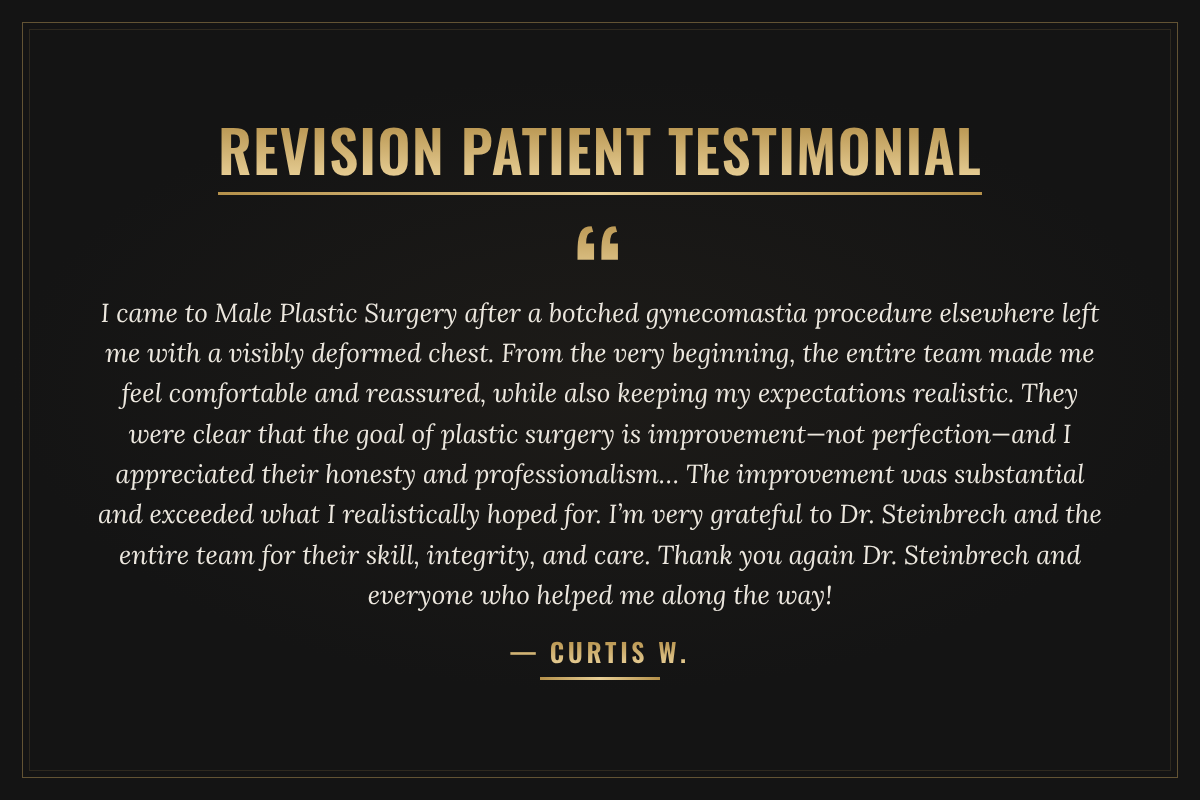
Records From Your Previous Surgeon
Notes from your original procedure help Dr. Steinbrech understand exactly what implants, grafts, and tissue layers were involved. You’re entitled to copies of your own medical records under federal law, and the office that did your procedure is required to provide them when you ask in writing. If records are incomplete or unavailable, Dr. Steinbrech can still evaluate you and plan your revision based on your exam and history.
Surgery Performed Out of State or Abroad
Some men had their original procedure in another state or another country, and found it difficult to go back for follow up care when problems appeared. Dr. Steinbrech regularly treats these patients. Bring any paperwork you have, especially implant cards listing the size and type of an implant, along with photos taken before your first surgery.
Timing Your Revision
Scar tissue needs time to mature before it can be safely revised. In the early months it’s crowded with new vessels and continues to contract, which means more bleeding and a higher chance of the new scar tightening again. Dr. Steinbrech generally recommends waiting 6 to 12 months after your last surgery, and up to 18 months for complex nose revisions or extensive liposuction repair. An infection, an implant pushing through the skin, or a lower lid that sags enough to stop the eye from closing should be seen right away. 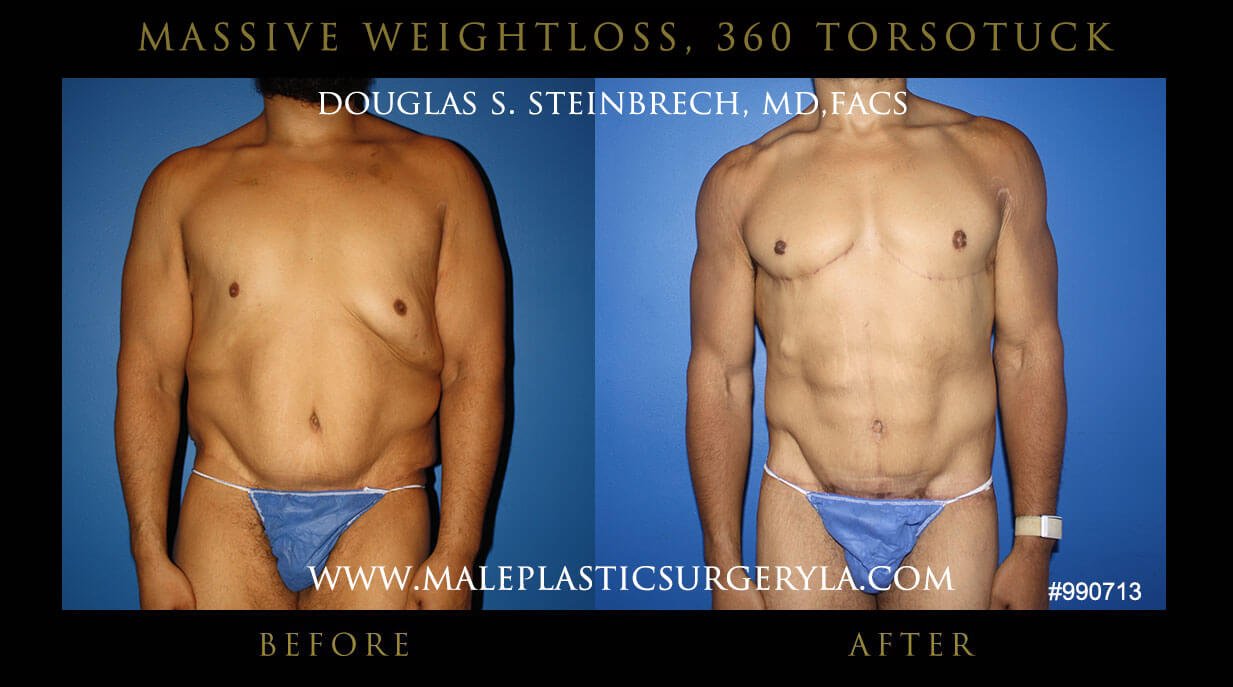
Your Consultation in Beverly Hills
Every revision consultation is with Dr. Steinbrech personally. He reviews your history and any records you bring, compares photos from before your original surgery with your current anatomy, and uses 3D imaging to evaluate contour and symmetry. The physical exam tells him the most: how much healthy tissue remains, where scar is tethering the skin, and whether there’s enough fat available for grafting. Many men arrive frustrated or hesitant after a disappointing first experience. The consultation is honest and straightforward. You’ll learn what happened, what can be corrected, and what result is realistic for you. If waiting is the better choice, or another surgery wouldn’t improve things, Dr. Steinbrech will tell you.
Recovery and Returning to Work
Recovery after revision surgery usually takes longer than after a first procedure, since swelling tends to last about 20 to 30 percent longer. Most men plan for 7 to 14 days away from work, depending on the area being treated. You’ll need a ride home after surgery and shouldn’t drive while taking prescription pain medication. New scars should also be kept out of the sun or covered with a high SPF sunscreen during the first year, which helps them fade evenly. 
Realistic Expectations for Revision Surgery
A revision can release tethered skin, restore lost volume, reposition or replace implants, and bring back masculine angles and proportions, and for most men the improvement is significant. Because a second surgery works with less tissue and more scar than the first, some cases are best handled in stages, and the goal is a strong, natural result rather than a guarantee of perfection. Dr. Steinbrech reviews all of this with you before anything is scheduled.
Questions Los Angeles Patients Ask
How do I request records from my previous surgeon? Contact the practice that performed your original surgery and request a copy of your surgical report, implant details, and any photos in your file. You have a legal right to your own medical records, and you don’t need to explain your reasons or speak with the surgeon directly. A small copying fee may apply. If records are incomplete or the office has closed, Dr. Steinbrech can still evaluate your case.
Can you correct surgery that was done outside the United States? Yes. Dr. Steinbrech regularly treats men whose original procedure was performed in another country, often because returning for follow up care wasn’t practical. Bring any documentation you received, especially implant cards, along with photos from before your first surgery. Even with limited records, he can examine you, determine what was done, and create a revision plan based on your current anatomy.
How long will I need to take off work? Most men take 7 to 14 days away from work, with the exact amount set by the area treated and the extent of the correction. Swelling usually takes about 20 to 30 percent longer to settle than it would after a first procedure. Compression garments are worn under clothing during recovery and are easy to conceal, so returning to work is usually more comfortable than men expect. 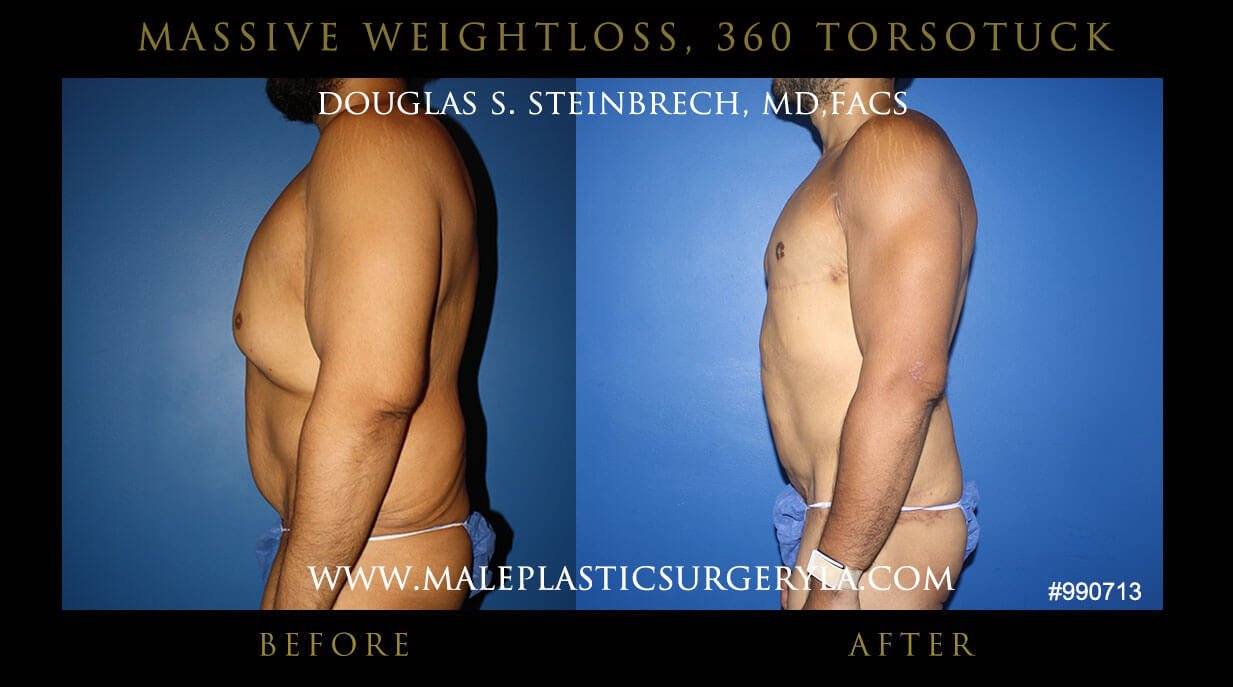 How long should I wait before a revision? For most revisions, Dr. Steinbrech recommends waiting 6 to 12 months after your last surgery so the scar tissue can mature. Complex nose revisions and extensive liposuction repairs may need up to 18 months. Revising too early increases bleeding and raises the odds of the fresh scar pulling tight once more. Infections, exposed implants, and eyelid problems affecting the eye should be evaluated right away.
Does a revision cost more than a first procedure? In many cases it does, because revisions usually involve more complex work, like scar release, fat grafting, or implant exchange, and they tend to run longer. Every revision is priced individually after Dr. Steinbrech examines you and determines what the correction will involve. You’ll receive a specific quote and a clear explanation of what’s included at your consultation.
Can I send photos before scheduling a consultation? Yes. If you live outside Los Angeles, or want an expert opinion before coming in, you can submit photos securely for a private virtual review. Dr. Steinbrech will evaluate the images, let you know whether revision looks like a good option, and advise whether an in person consultation at our Beverly Hills office is the right next step.
Schedule a Confidential Revision Consultation in Beverly Hills
Dr. Steinbrech personally sees every revision patient at Alpha Male Plastic Surgery’s Beverly Hills office. Use the form on this page to request your consultation, and bring any records from your previous surgery. If you live outside Los Angeles, start by sending photos for a private review.