









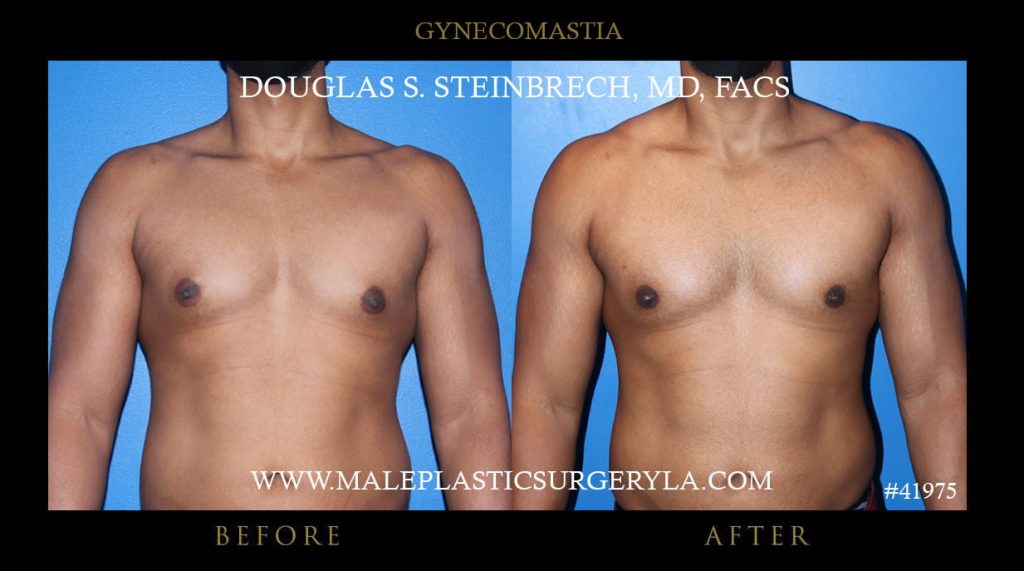
Gynecomastia is a condition in which men develop enlarged breast tissue. In the United States, this condition is commonly treated with male chest reduction surgery, allowing patients to achieve a flatter, more masculine chest with minimal scarring. Dr. Douglas Steinbrech and his team at Male Plastic Surgery Los Angeles have specialized in gynecomastia surgery for men in Los Angeles for years, helping patients regain confidence through advanced surgical techniques designed specifically for the male physique.
Gynecomastia is far more common than many people realize, affecting an estimated 40 to 60 percent of men at some point in their lives. Although the condition is common, enlarged male breast tissue can have a significant impact on confidence, body image, and quality of life. Our goal is to restore a masculine chest contour using the latest techniques available in male plastic surgery. Many patients also combine gynecomastia surgery with procedures such as liposuction for men or BodyBanking® to further enhance upper body definition.
What Is Gynecomastia?
Scientifically known as andromastia, gynecomastia is characterized by excess glandular breast tissue, excess fatty tissue, or a combination of both. The condition may affect one or both sides of the chest and can occur in men of all ages.
Gynecomastia develops for several reasons, including hormonal changes, genetics, certain medications, underlying medical conditions, or significant weight fluctuations. Before recommending surgery, Dr. Steinbrech performs a comprehensive evaluation to determine whether there is an underlying medical cause that should be addressed.
Dr. Steinbrech and the team at Male Plastic Surgery Los Angeles have extensive experience performing male chest reduction surgery. Patients no longer have to hide behind loose-fitting clothing or avoid situations where they feel uncomfortable removing their shirts. Using advanced surgical techniques and small, discreet incisions, many men are able to achieve a flatter, more sculpted chest with natural-looking results.
How Does Gynecomastia Surgery Work?
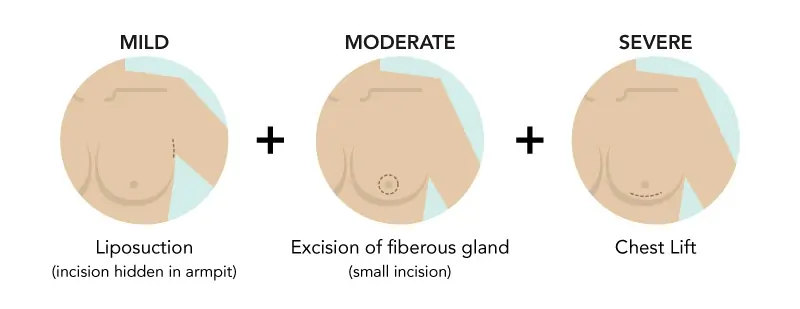
Gynecomastia surgery is customized according to each patient’s anatomy and may involve liposuction, direct removal of glandular tissue, skin tightening, or a combination of techniques. Surgery typically takes approximately two hours and is performed under local anesthesia with sedation or general anesthesia.
At Male Plastic Surgery Los Angeles, Dr. Steinbrech offers MiniGyno™ Incision Treatment with TetherProof™ Technology, an advanced approach that removes glandular tissue through smaller, more discreet incisions while preserving the natural appearance of the chest. The goal is to eliminate excess breast tissue while creating smooth, masculine chest contours.
Patients are typically fitted with a compression garment following surgery to help reduce swelling and support healing.
What Are the Different Types of Gynecomastia?
Type 1
Type 1 gynecomastia is characterized by enlarged or “puffy” nipples. This form commonly affects younger men who have minimal fat but excess glandular tissue beneath the areola. Surgical removal of the glandular tissue typically produces excellent results.
Type 2
Type 2 is the most common form of gynecomastia. Patients develop fuller, rounded chest contours due to excess fatty tissue, glandular tissue, or both. Treatment often includes liposuction, gland removal, or a combination of both procedures.
Type 3
Type 3 gynecomastia generally affects older patients or men whose condition has progressed over time. The chest begins to sag below the natural chest crease, creating the appearance commonly referred to as “man boobs.” Surgical removal of glandular tissue is usually required.
Type 4
Type 4 includes excess breast tissue along with noticeable skin laxity. Both breast tissue and the nipple begin to droop, requiring removal of glandular tissue and, in some cases, skin tightening procedures.
Type 5
Type 5 gynecomastia involves significant sagging of the chest while the areola remains above the chest fold. Treatment often combines liposuction with glandular tissue removal and may include lifting techniques to improve chest shape.
Type 6
Type 6 is frequently seen after major weight loss or in overweight patients. The chest tissue extends below the chest fold and may continue toward the underarm or back. Surgery often combines liposuction, tissue removal, and skin tightening.
Type 7
Type 7 is the most advanced form of gynecomastia. The areola sits below the chest fold and substantial breast tissue extends across the chest. Comprehensive surgical correction is typically required to restore a flatter, masculine chest contour.
How Much Does Gynecomastia Surgery Cost?
One of the most common questions patients ask is how much gynecomastia surgery costs. The answer depends on several factors, including the severity of the condition, whether excess glandular tissue, fat, or skin must be removed, and the surgical techniques used to create the best possible result.
Your personalized treatment plan may include liposuction, direct excision of glandular tissue, skin tightening, or a combination of procedures. The total cost can also be influenced by anesthesia, surgical facility fees, and whether additional body contouring procedures are performed during the same operation.
The best way to receive an accurate estimate is through a consultation with Dr. Steinbrech. During your visit, he will evaluate your chest, discuss your goals, explain your treatment options, and provide a customized surgical plan designed specifically for your anatomy.
Gynecomastia Recovery Timeline
Recovery varies from patient to patient, but most men are able to return to many normal activities within a relatively short period.
First Week
Swelling, bruising, and mild soreness are expected during the first several days following surgery. Compression garments should be worn as directed to minimize swelling and support your new chest contours.
Two to Three Weeks
Many patients return to desk work and light daily activities within the first week. Swelling gradually continues to improve, although strenuous activity should still be avoided.
Four to Six Weeks
Most patients are cleared to resume exercise, including upper-body workouts, once healing has progressed appropriately. Dr. Steinbrech will provide personalized guidance based on your recovery.
Long-Term Healing
Residual swelling continues to resolve over the following months as the chest settles into its final contour. Following all postoperative instructions and attending scheduled follow-up appointments helps optimize your results.
Book NOW For A Gynecomastia Consultation
BOOK HERE or Call 213-493-8391

Gynecomastia Before and After Results
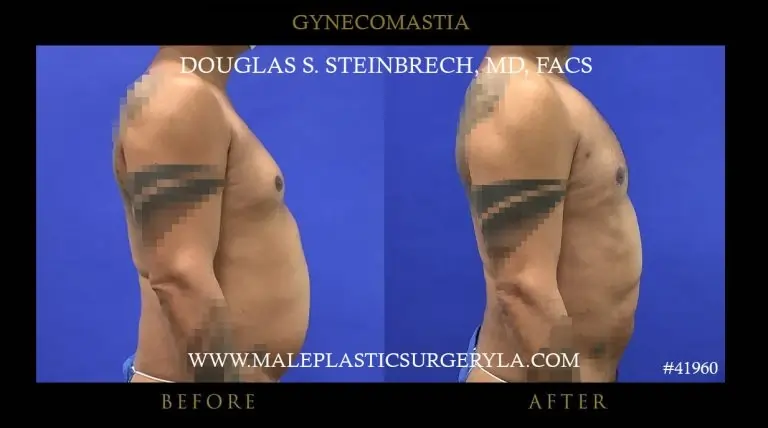
Before deciding on surgery, many patients find it helpful to review real patient results. Our Gynecomastia Before and After Gallery showcases examples of patients who have undergone male chest reduction surgery performed by Dr. Steinbrech.
Every patient has unique anatomy, so results will vary. During your consultation, Dr. Steinbrech can review cases similar to your own and explain what can realistically be achieved based on your goals.
Schedule a Gynecomastia Consultation in Los Angeles
If you’re considering gynecomastia surgery in Los Angeles, schedule a consultation with Dr. Douglas Steinbrech to discuss your options. During your visit, you’ll receive a comprehensive evaluation, a personalized treatment plan, and answers to all of your questions about male chest reduction surgery.
Call 213-493-8391 or contact our office online to schedule your consultation today.
BOOK HERE FOR GYNECOMASTIA SURGERY LOS ANGELES or Call 213-493-8391
Frequently Asked Questions About Gynecomastia
What causes gynecomastia?
Gynecomastia is most commonly caused by hormonal changes, genetics, certain medications, medical conditions, or significant weight fluctuations that lead to enlarged male breast tissue.
Can gynecomastia go away without surgery?
Some cases that develop during puberty may improve naturally. However, long-standing glandular breast tissue generally does not disappear with diet or exercise alone and often requires surgery for permanent correction.
Is gynecomastia surgery permanent?
The glandular tissue removed during surgery is permanently eliminated. Maintaining a stable weight and healthy lifestyle helps preserve long-term results.
Will I have scars after gynecomastia surgery?
Some scarring is unavoidable with any surgery, but Dr. Steinbrech uses advanced techniques to place incisions as discreetly as possible. Over time, scars typically continue to fade.
Can gynecomastia surgery be combined with other procedures?
Yes. Many patients combine gynecomastia surgery with liposuction for men, BodyBanking®, or other body contouring procedures for men to achieve a more comprehensive upper-body definition.
Who is a good candidate for gynecomastia surgery?
Healthy men with enlarged breast tissue that has not responded to weight loss or exercise are often excellent candidates. A consultation allows Dr. Steinbrech to determine the most appropriate treatment plan based on your anatomy and goals.